JUST BROUGHT IT HOME?
A good start, in three steps.
- Give it your brightest warm growing spot.
- Check the soil daily at first, but water only when needed.
- Inspect crowded supermarket seedlings before deciding to divide or pot on.
Light & placement
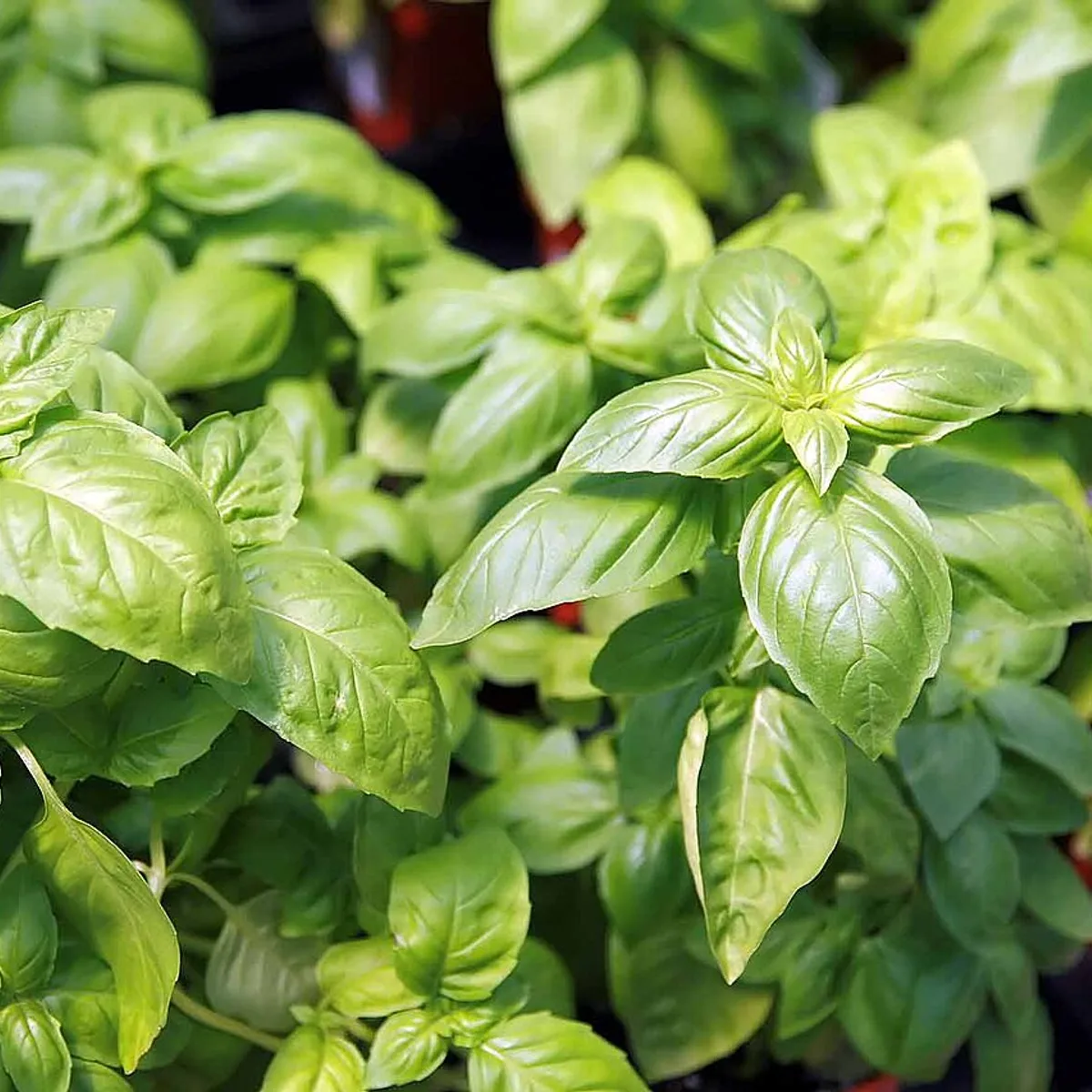
Basil needs abundant light and warmth. Indoors, a grow light may be more reliable than a dim kitchen windowsill. Introduce an indoor-grown plant to outdoor sun gradually after frost risk has passed.
Water & drainage
Keep the mix evenly moist with good drainage. Feel the surface before watering. Small, crowded pots can dry quickly in sun.
Harvest & shape
Snip a growing tip just above a pair of leaves, leaving foliage below to regrow. Remove flower buds if leafy harvests are your goal. Take modest amounts while a small plant establishes.
Growing well
Feed container plants according to an edible-crop fertilizer label. Good light and regular tip harvesting help produce a branching plant. Treat sweet basil as a seasonal crop rather than expecting an endless lifespan.
When something looks wrong
Long, weak stems need a light check. Yellow patches with gray growth underneath can be downy mildew; isolate the plant and consult the linked guide.
Three things to avoid.
- Letting the whole pot repeatedly wilt dry.
- Taking every leaf from a single stem.
- Leaving it outside through chilly nights.
Rooted in good information
NC State Extension · Ocimum basilicum ↗Iowa State Extension · Growing herbs indoors ↗Reviewed October 3, 2026. Guidance is for container growing. Light, climate, pot size, and season change what your plant needs. Outdoor winter survival varies by location and cultivar.
How we write our guides & use photographs