JUST BROUGHT IT HOME?
A good start, in three steps.
- Choose a deep pot and a sunny spot.
- Avoid disturbing the long taproot.
- Shelter tall growth from strong wind.
Light & placement
Provide plenty of sun and room to grow tall. Compact cultivars suit pots better. A sunny outdoor position is generally easier than a dim indoor sill.
Water & drainage
Keep moisture consistent while it grows, with free drainage. Deep containers accommodate the taproot. Avoid repeated transplanting.
Harvest & shape
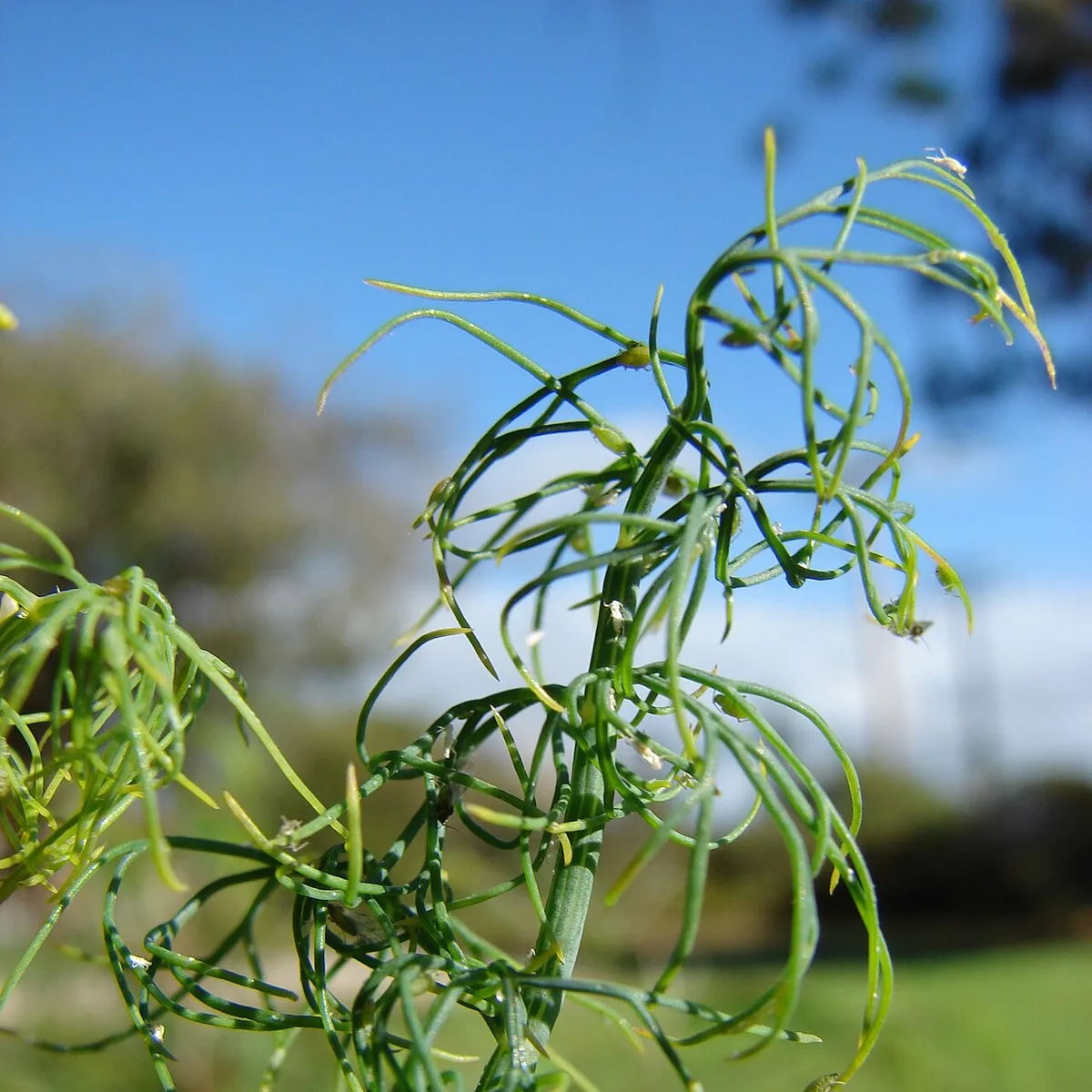
Snip small amounts of the feathery leaves after the plant establishes. Leave plenty of foliage. Flowers eventually develop seed heads, which are a different harvest from the leaves.
Growing well
Sow successive batches for continued leaf harvests. Tall varieties may need support. Dill is an annual; flowering and eventual decline are part of its life cycle.
When something looks wrong
Weak, leaning stems warrant checking light and wind exposure. Early flowering may follow heat or stress. A fresh sowing is usually more productive than trying to reverse a mature plant’s life cycle.
Three things to avoid.
- Using a shallow decorative pot.
- Expecting endless leaves from a flowering annual.
- Harvesting most of a small seedling at once.
Rooted in good information
NC State Extension · Anethum graveolens ↗Iowa State Extension · Growing herbs indoors ↗Reviewed October 3, 2026. Guidance is for container growing. Light, climate, pot size, and season change what your plant needs. Outdoor winter survival varies by location and cultivar.
How we write our guides & use photographs