JUST BROUGHT IT HOME?
A good start, in three steps.
- Choose a sunny place with air movement.
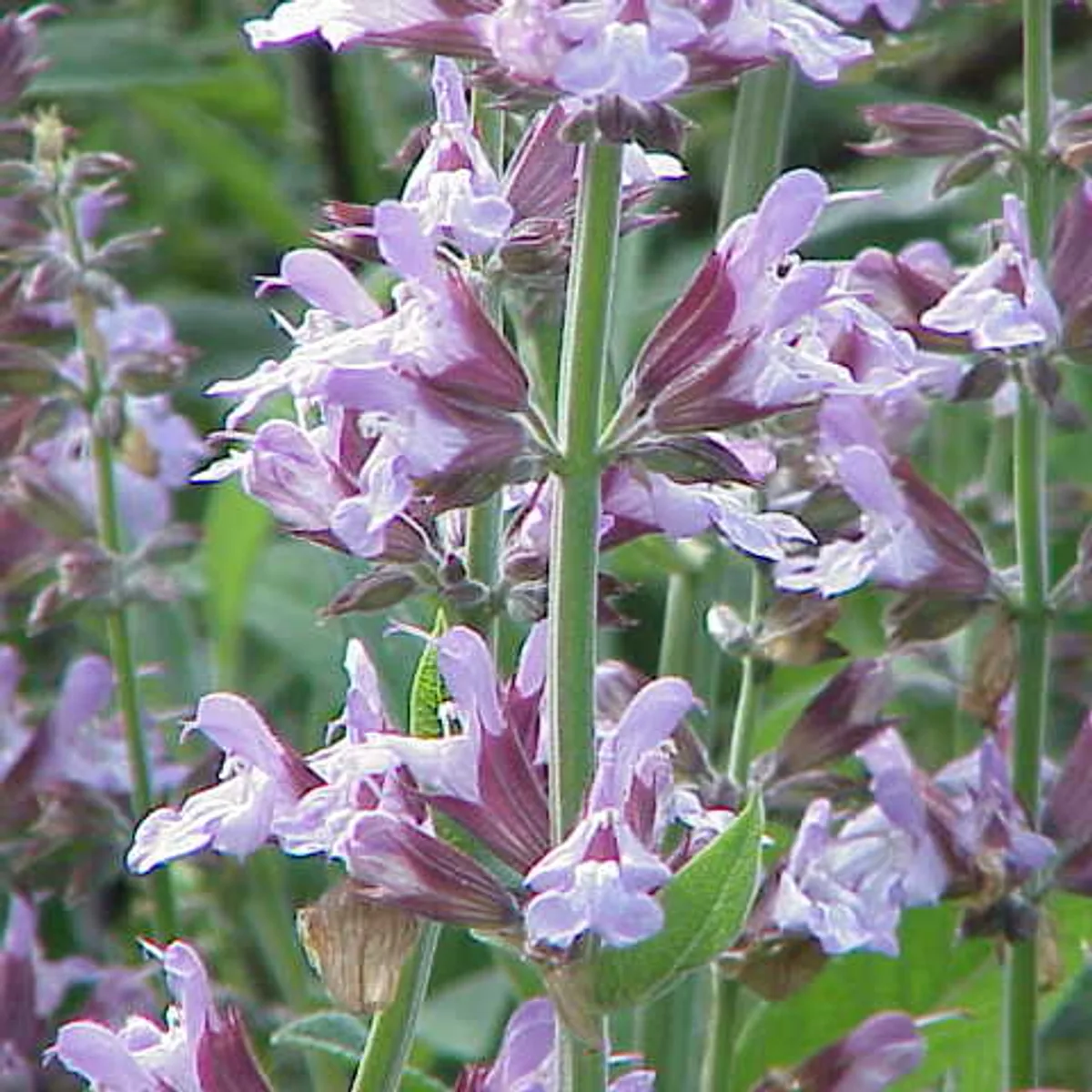
- Confirm the label says culinary sage.
- Check the root zone before watering.
Light & placement
Use a sunny, airy spot. Common sage is a woody herb and usually does better with strong light than on a shaded kitchen counter.
Water & drainage
Let the upper mix dry before watering. Keep drainage clear, particularly outdoors in wet weather. Established plants tolerate some dryness, but a small pot still needs checking.
Harvest & shape
Pick a few leaves or snip soft shoot tips, leaving green growth below. Avoid stripping a young plant. Light shaping is safer than cutting into leafless wood.
Growing well
Use modest feeding. In cold climates, protect container roots and avoid heavy late-season pruning. Older plants may become woody and less productive.
When something looks wrong
Pale, stretched growth suggests insufficient light. White powdery patches need an airflow and disease check. Do not apply a treatment to an edible crop unless its label allows that use.
Three things to avoid.
- Confusing ornamental salvias with culinary sage.
- Keeping leaves and roots constantly wet.
- Cutting deeply into bare old stems.
Rooted in good information
NC State Extension · Salvia officinalis ↗Iowa State Extension · Growing herbs indoors ↗Reviewed October 3, 2026. Guidance is for container growing. Light, climate, pot size, and season change what your plant needs. Outdoor winter survival varies by location and cultivar.
How we write our guides & use photographs